
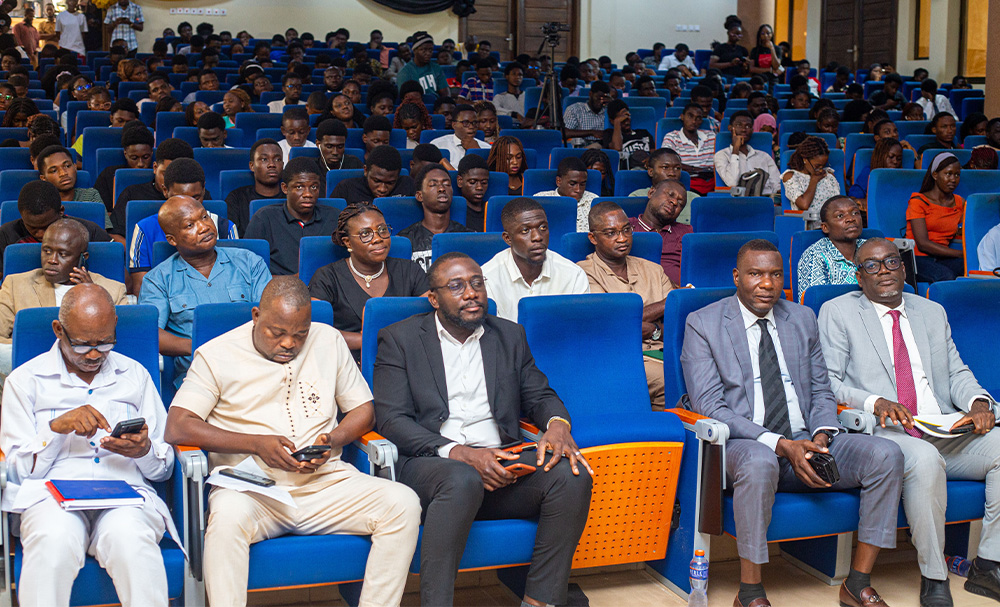
The Department of Geomatic Engineering at the Kwame Nkrumah University of Science and Technology, Kumasi (KNUST) has launched its 50th anniversary celebration themed “Celebrating 50 Years of Shared Legacy in Spatial Excellence,” marking five decades of excellence in teaching, research, innovation, and professional contribution to geospatial science and national development.
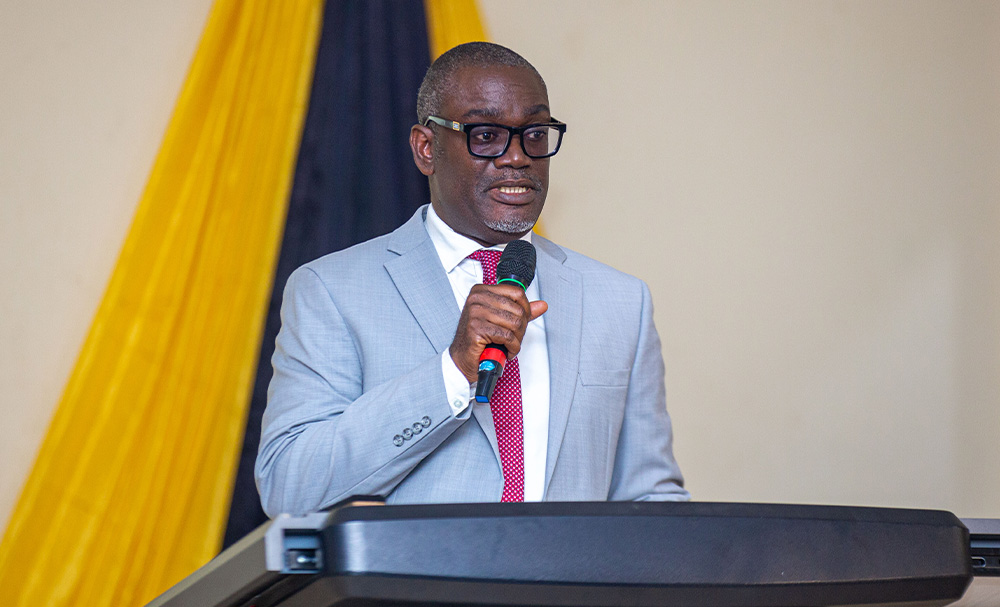
The Provost of the College of Engineering, Professor Kwabena Biritwum Nyarko, described the celebration as a historic moment for the university, while noting its significance as it coincides with multiple milestones within the university community.
“We gather in a season of rare significance, for this is a year in which three milestones meet beneath one roof,” he said, referencing the 50th anniversary of the department, the 75th anniversary of the College of Engineering, and the upcoming 75th anniversary of KNUST.
Speaking on the history of the department, he noted that surveying education was first introduced in 1961 as a specialisation within Civil Engineering at the then Kumasi College of Technology. According to him, the establishment of the department in 1975 marked a major turning point, with its later evolution from Geodetic Engineering to Geomatic Engineering reflecting modern advances in satellite positioning, remote sensing, and digital spatial technologies.
He noted that the field has progressed “from chains to satellites,” now incorporating Global Navigation Satellite System (GNSS), remote sensing, LiDAR, drones, artificial intelligence, and advanced spatial analytics, all of which continue to support national development efforts.
Despite these advances, he stressed that the Department has remained central to Ghana’s development by providing accurate spatial data that supports land administration, infrastructure development, mining, environmental management, urban planning, and national digital addressing systems.
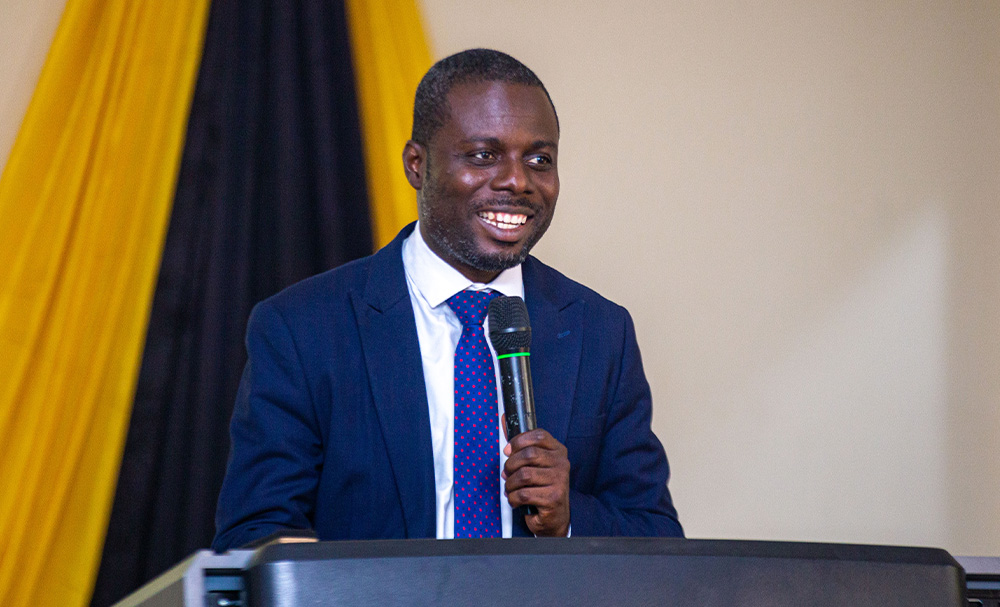
The Head of the Department of Geomatic Engineering, Professor Samuel Ato Andam Arkoful, emphasised the department’s central role in training professionals who support Ghana’s spatial infrastructure.
“For 50 years, the Department of Geomatic Engineering has been at the forefront of training personnel who champion spatial development in our country,” he stated.
He appealed for increased support in terms of modern equipment and resources, stressing the need for UAVs, GNSS receivers, hydrographic instruments, and high-performance computing systems to match global technological advancements. He emphasised that without adequate investment, it would be difficult to fully prepare students for the demands of the 21st-century spatial industry.
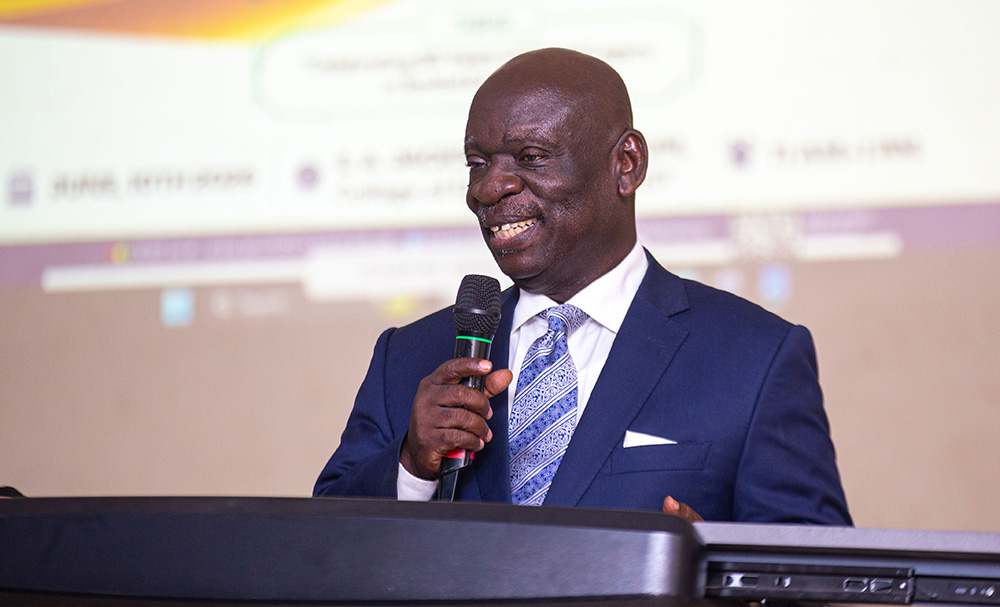
Delivering a keynote address, Former Managing Director of the Electricity Company of Ghana, Surveyor Ing. Robert Dwamena, reflected on the historical journey of the profession, recalling its humble beginnings when surveying was conducted using chains, tapes, and manual computations.
He noted that despite the challenges of those early years, the profession laid a strong foundation for national development.
“Those were very difficult days, but from those humble beginnings emerged a generation that built the geospatial backbone of Ghana,” he said.
He further explained that geospatial science has now become central to governance, infrastructure development, and environmental management, stressing that accurate spatial data is critical for effective decision-making.
He urged stakeholders to continue investing in the sector to ensure that Ghana remains competitive in a rapidly evolving digital world.
The Member of Parliament for South Tongu and alumnus, Maxwell Kwame Lukutor, underscored the national importance of the department’s work. He stated that no meaningful development can take place without the contribution of geomatic professionals, noting that “every land title issued, every development plan approved, and every infrastructure project executed depends, in one way or another, on geospatial expertise.”
He encouraged students to uphold integrity, discipline, and professionalism in their practice, drawing from his personal journey from student leadership to public service. He further urged graduates to remain resilient and committed to excellence as they contribute to national development.


